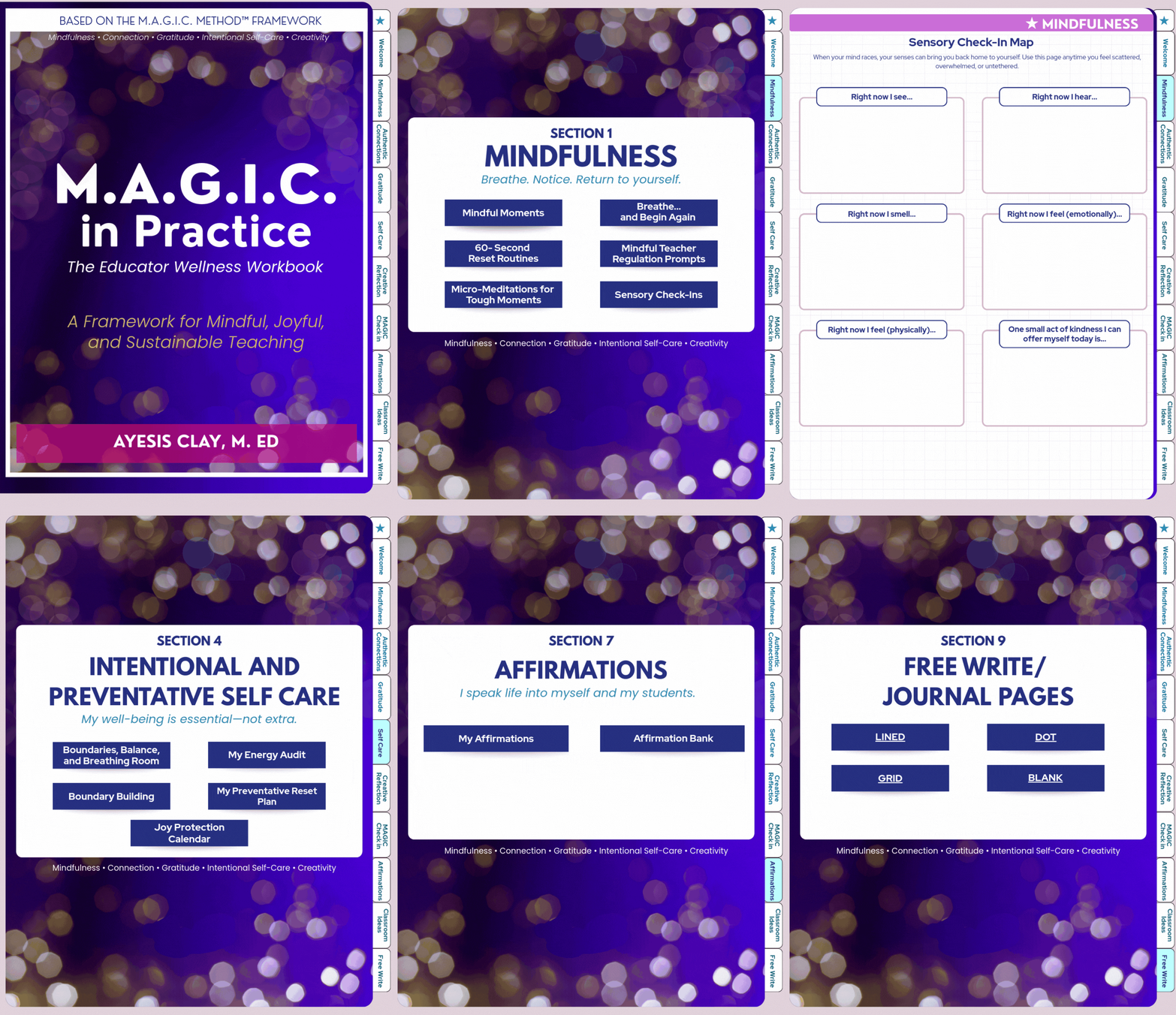
Morale drops when staff feel isolated, unseen, and constantly behind. The M.A.G.I.C. Method® gives educators a shared language and daily practices to regulate stress, reconnect to purpose, and rebuild small wins. Instead of “pushing through,” teams learn how to pause, reset, and support one another in consistent, doable ways—so the building feels lighter and more human.
Absences often spike when stress becomes physical—headaches, fatigue, burnout, “I can’t do another day.” M.A.G.I.C. helps educators notice early signs of overload and respond with preventative practices (not just recovery after a crash). When staff have tools to manage emotional overwhelm, set boundaries, and stabilize their nervous systems, they’re more likely to stay well enough to show up.
School culture isn’t built by posters. It’s built by how people feel walking into the building. M.A.G.I.C. supports culture by creating consistent rituals for reflection, appreciation, and connection—so staff stop operating in survival mode. Over time, it replaces silent suffering with shared practices, healthier norms, and a stronger sense of “we’re in this together.”
Collaboration falls apart when people are dysregulated, resentful, or too depleted to communicate well. M.A.G.I.C. strengthens collaboration by helping staff regulate emotions, build authentic connections, and practice gratitude and appreciation in ways that feel real. When educators feel grounded and supported, they’re more willing to problem-solve, share ideas, and stay engaged with the team.
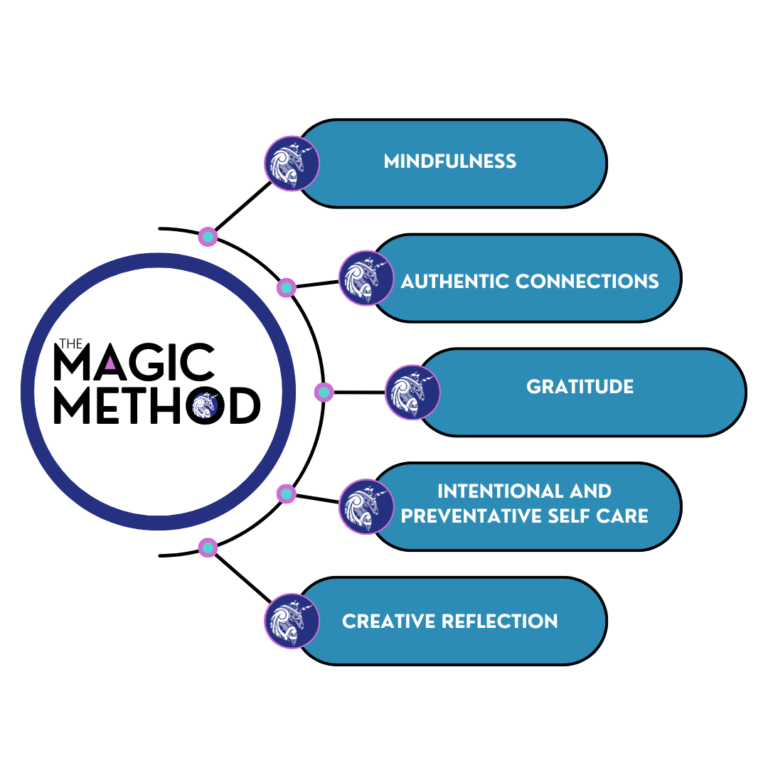
Just like burnout isn’t caused on single thing, it isn’t fixed by a single self-care tip. It takes a structure. M.A.G.I.C. offers a repeatable framework for recovery that includes nervous-system resets (Mindfulness), relationship support (Authentic Connections), meaning-making (Gratitude), sustainable boundaries (Intentional Self-Care), and reflective release (Creativity).
It helps educators recover capacity in small increments—without guilt and without pretending everything is fine.
Psychological safety means people can be honest without fear—about mistakes, needs, stress, and support. M.A.G.I.C. builds that safety by normalizing reflection, teaching emotional regulation, and creating simple ways for staff to check in and connect. When teams have a shared process for naming what’s real and responding with care, trust grows—and people stop masking and start communicating.